For Stillness
This pop-up book was created in my interaction design course to prompt readers to reflect on whether their personal technology usage brings them happiness and fulfillment, as well as remind them of a time when our interactions with technology were slower and analog while still being entertaining. Choosing analog mechanics over a digital solution was a deliberate reflection on what digital interaction design has replaced, guiding readers to reflect on intentional interaction rather than reject technology altogether. I conducted the research, scientific synthesis, iterative visual layout and paper engineering, and hand-bound the book.
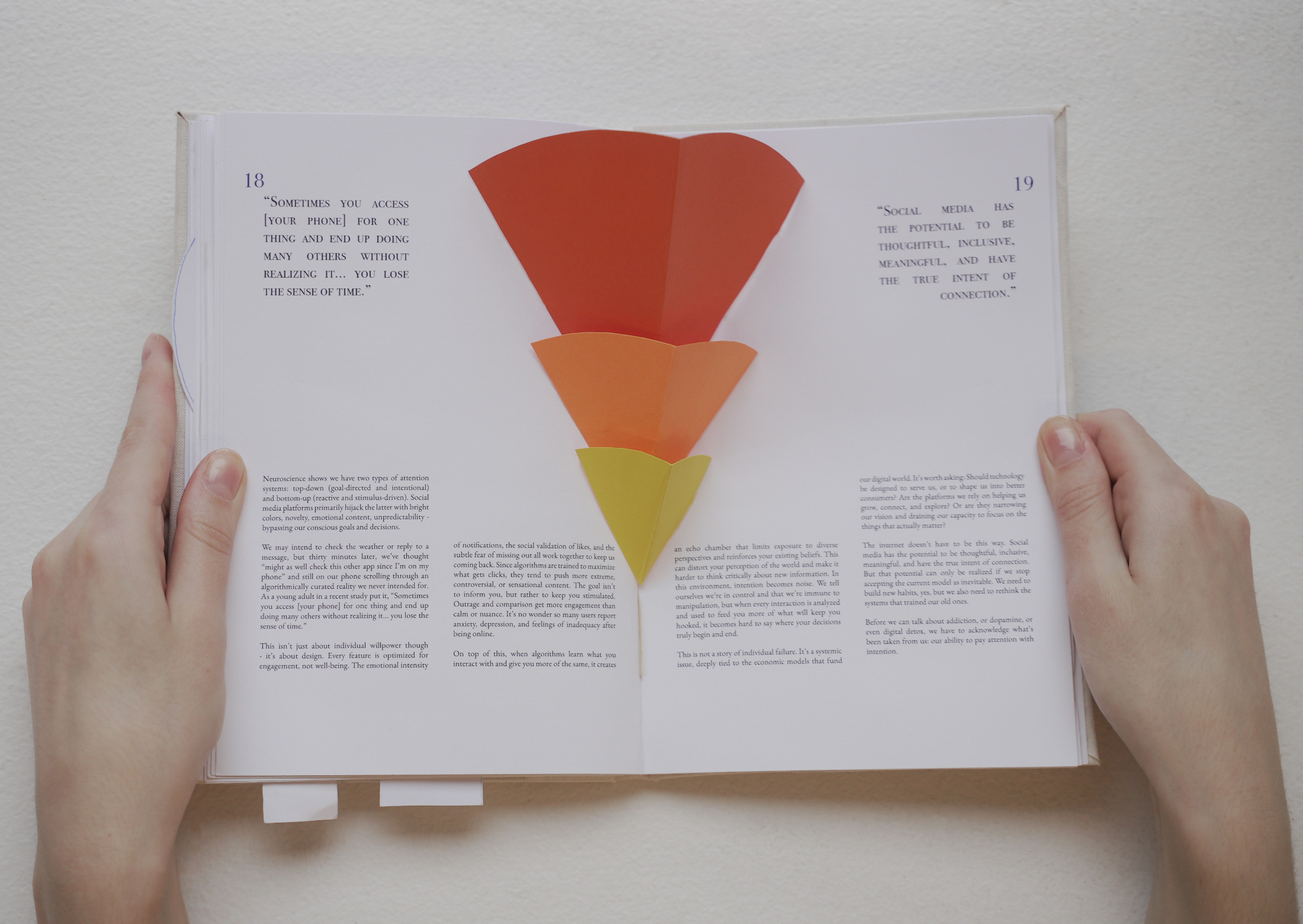
Conversations about digital distraction rarely offer a tangible experience of slower, intentional interaction.
I wanted to explore whether a physical book could make slower, intentional interaction something readers experienced firsthand. Turning pages and engaging with paper mechanisms became part of the inquiry, giving readers a way to reflect on their technology habits through the pace and physicality of the experience itself.
The inherent nature of technology is not the problem, as it can connect us with people we love and enrich our lives. But the way we interact with it has quietly shifted and most of us haven't stopped long enough to notice what that shift has cost us.
A pop-up book as a deliberate, analog call-back to slower interaction.
Through entry points spanning scientific concepts about dopamine processing, attention fragmentation, and story, the goal isn't to reject technology altogether, but to remind readers what deep engagement feels like without constant artificial stimuli.

By creating a modern educational tool through the oldest form of user experience, it offers stillness, focus, and intentional interaction as the antithesis of our fast-paced digital world.
Trying to evoke an emotional response
through language and paper.
Prototype 01
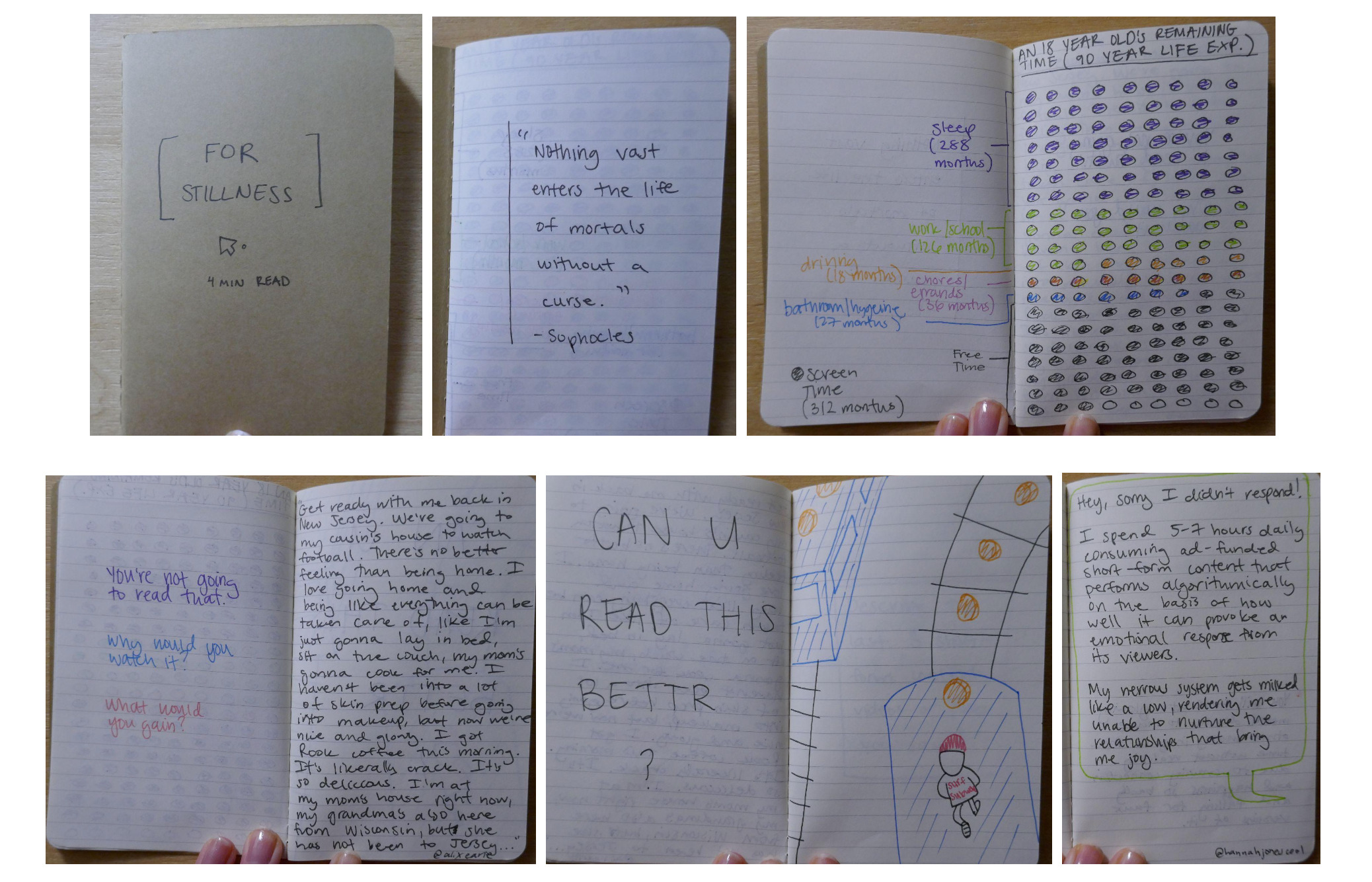
A hand-drawn booklet
My first prototype was a small booklet I drew and wrote in by hand, with direct questions to the reader and references to social-media culture. In testing, users responded positively (the data visualization specifically evoked shock and felt like it elicited an important conversation). They liked that it was a held book rather than something digital.
Prototype 02
My first hand-bound book
I hand-bound a book from scratch and glued in prints of InDesign pages. The text was Lorem Ipsum, but users were told the intended content to spark a deeper discussion on dopamine and the manipulation of technology. The goal was to read flow, pop-up engagement, and whether it still evoked an emotional yet reflective response.
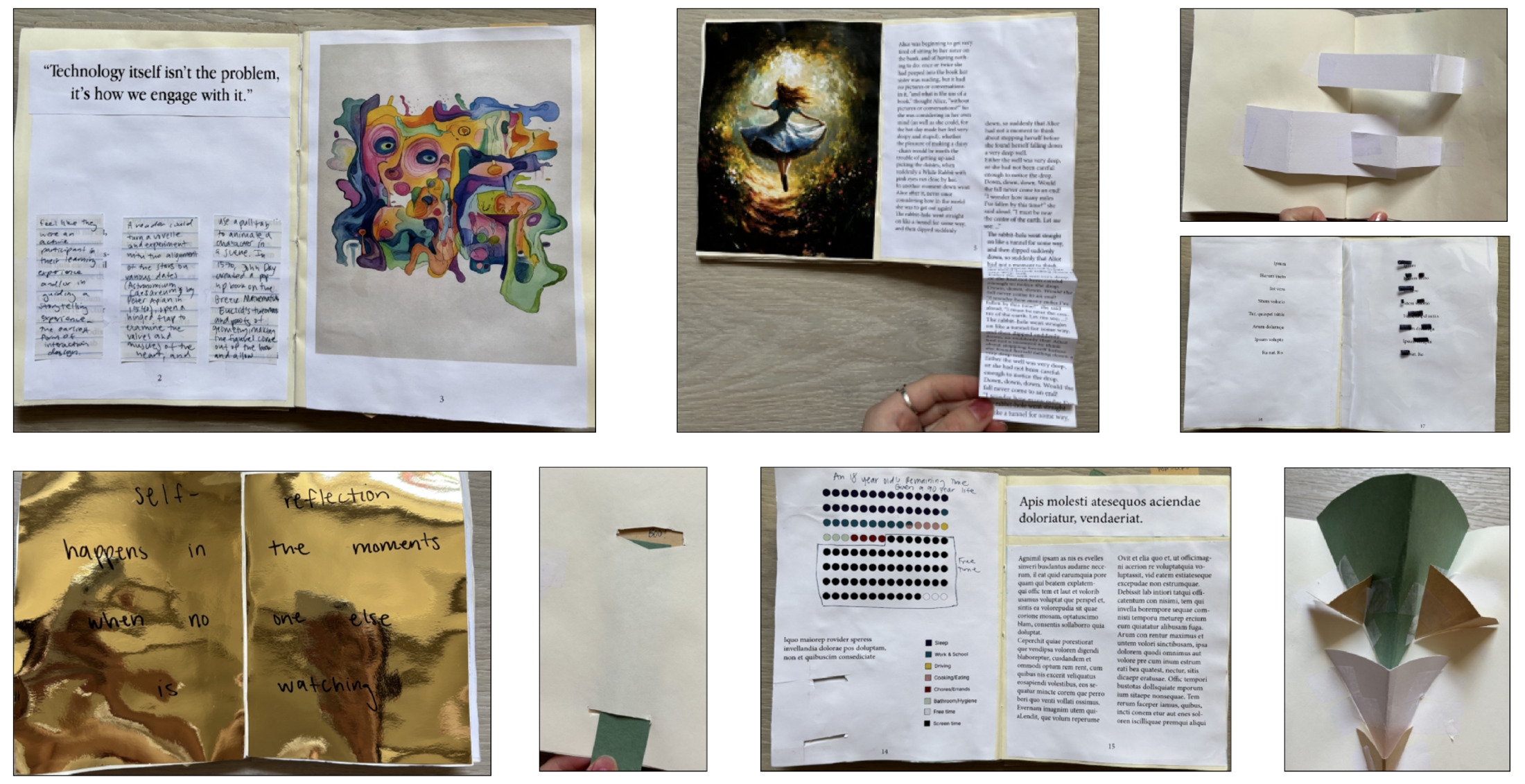
Users felt engaged by the pop-ups, but the organization and scope needed further ideation. The Midjourney illustrations were guided by drawings users made during testing about their own media usage.
Prototype 03
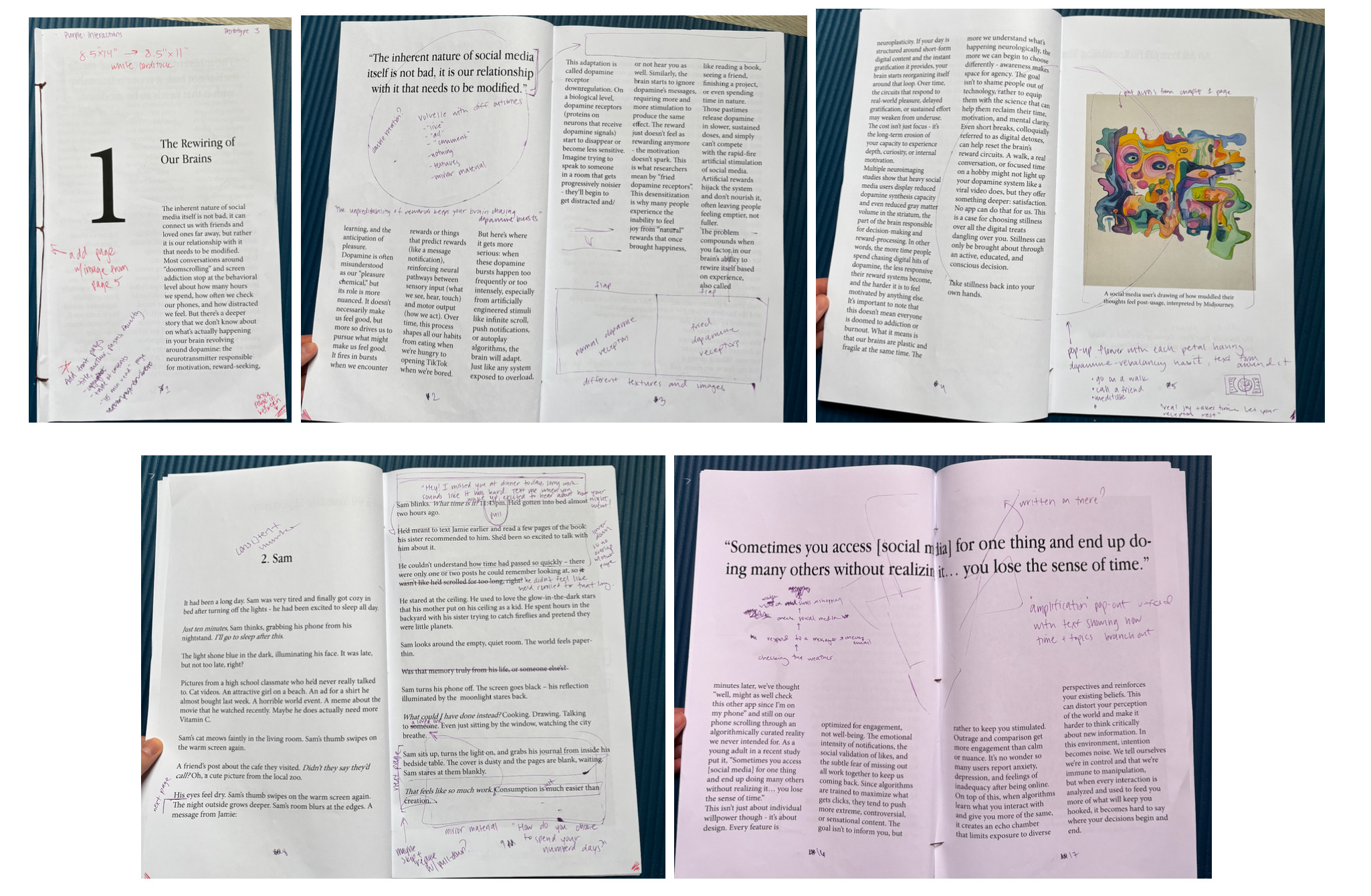
Engineering where the pop-ups live
The third prototype had no testing, but was rather centered around trying to figure out where the pop-ups should go and both how the text should be moved around in order to accommodate them and what pop-ups could best compliment the page's content and intent. To make a pop-up on a specific page, you have to leave the next two pages blank to be glued together to accommodate for its mechanisms to function, so it was important to be meticulous about that division.
Stepping out of my comfort zone.
The book was perfect-bound by hand. Its construction entailed the following materials: book cloth, cardboard, cardstock paper (both colored and white), neutral pH adhesive glue, binding ribbon, awl, brush, bone folder, wax thread, curved needles, Exacto knife, rotary cutter, light gel filter sheets, book binding tape, Lineco archival document repair tape, Scotch tape, and a book press.
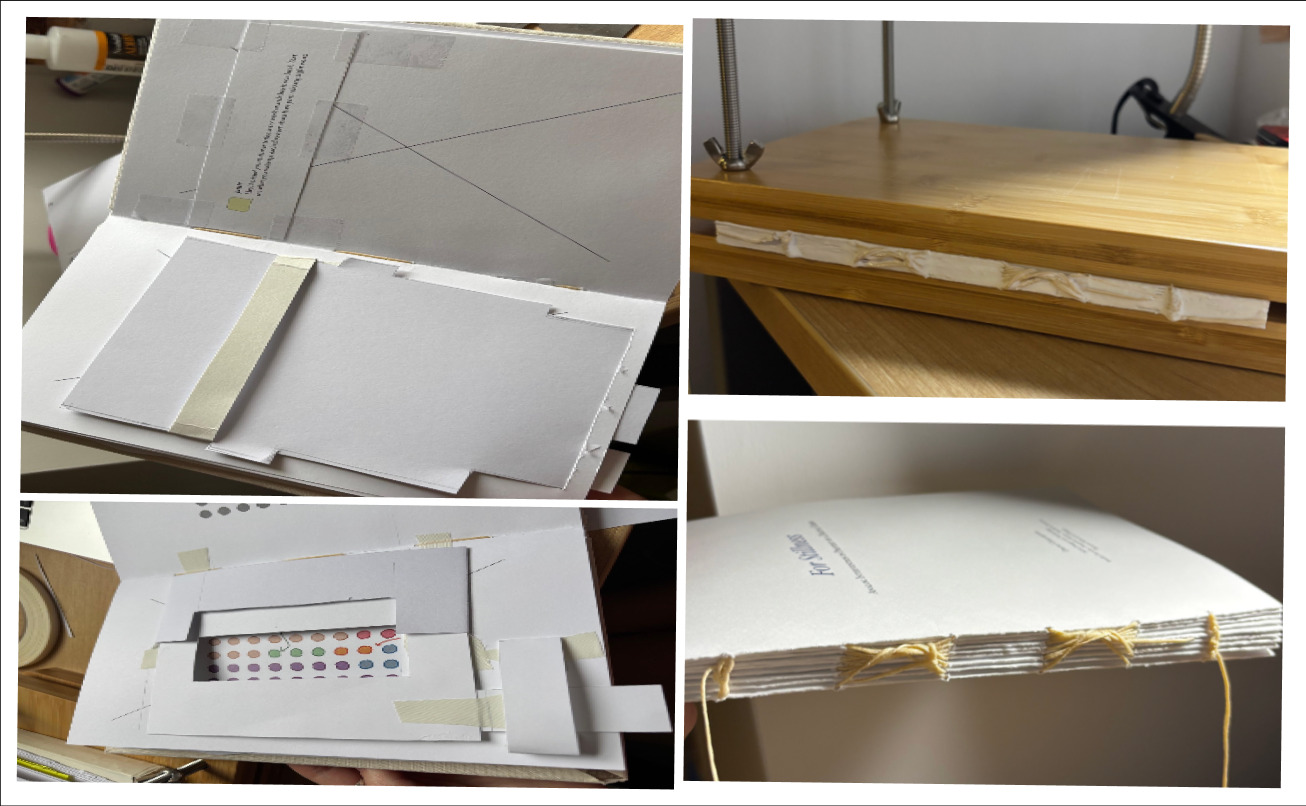
A purposeful act of reflection despite the commodification of attention.
A full read-through film of the finished book was recorded, but it exceeds the maximum inline asset payload this platform supports for embedded video, so rather than bundling the encoded file into the page it's hosted externally. Watch the complete walkthrough below:
The finished book is divided into four chapters, each a different entry point into the same question (moving from the science, to a story, to the systems around us, to a call to act).
The Rewiring of Our Brains
How reward systems and dopamine processing are shaped by the way we use technology.
The Universal Experience
A short fictional story drawn from the user interviews (the shared, recognizable shape of distraction).
The Architecture of Distraction
Attention fragmentation and the algorithm, the systems built to hold our focus.
Intentional Interaction
A brief history of interaction, ending in a call to action to make active, deliberate choices.
Exploring analog space and design as a digital designer.
This project was an absolute labor of love and I am so proud of the outcome. Going into it, my goal was to expand on my visual design skills through designing book page layouts — I achieved that and so much more. As a digital designer, this was a huge jump outside of my comfort zone; the physical toll of craft aside, this may have been the most difficult project I've worked on due to the journey into the analog and unknown.
Early testing gave me a clearer sense of what the format could offer: readers responded positively to holding a physical book and engaging with its pop-ups, while the organization and scope needed refinement. Those responses supported further exploration of the format, without establishing lasting changes in attention or technology habits. Working in paper expanded how I think about designing the pace and feel of an interaction.
I cannot thank the Parsons School of Design faculty that oversaw this project enough — this project would not be possible without the support, guidance, and discussions with Dr. Harpreet Sareen and Andrew Zornaza had with me. I am honored to be your student!